

I’m attempting to make a fan film of The Shadow. Please consider following the movie’s launch page on Kickstarter:
My friend Ryan Lathrop, a man who was the biggest cheerleader for his friends and who left us much too soon, once said of me: “Imagine how many movies Jacob could have made by now if he liked mumblecore. But he likes Sam Raimi and Doctor Who.”
In my 15+ years of filmmaking, I’ve often underestimated just how ambitious my ideas are. I tend to write scripts with lots of characters, costumes, monsters, props, special effects, multiple sets and locations.
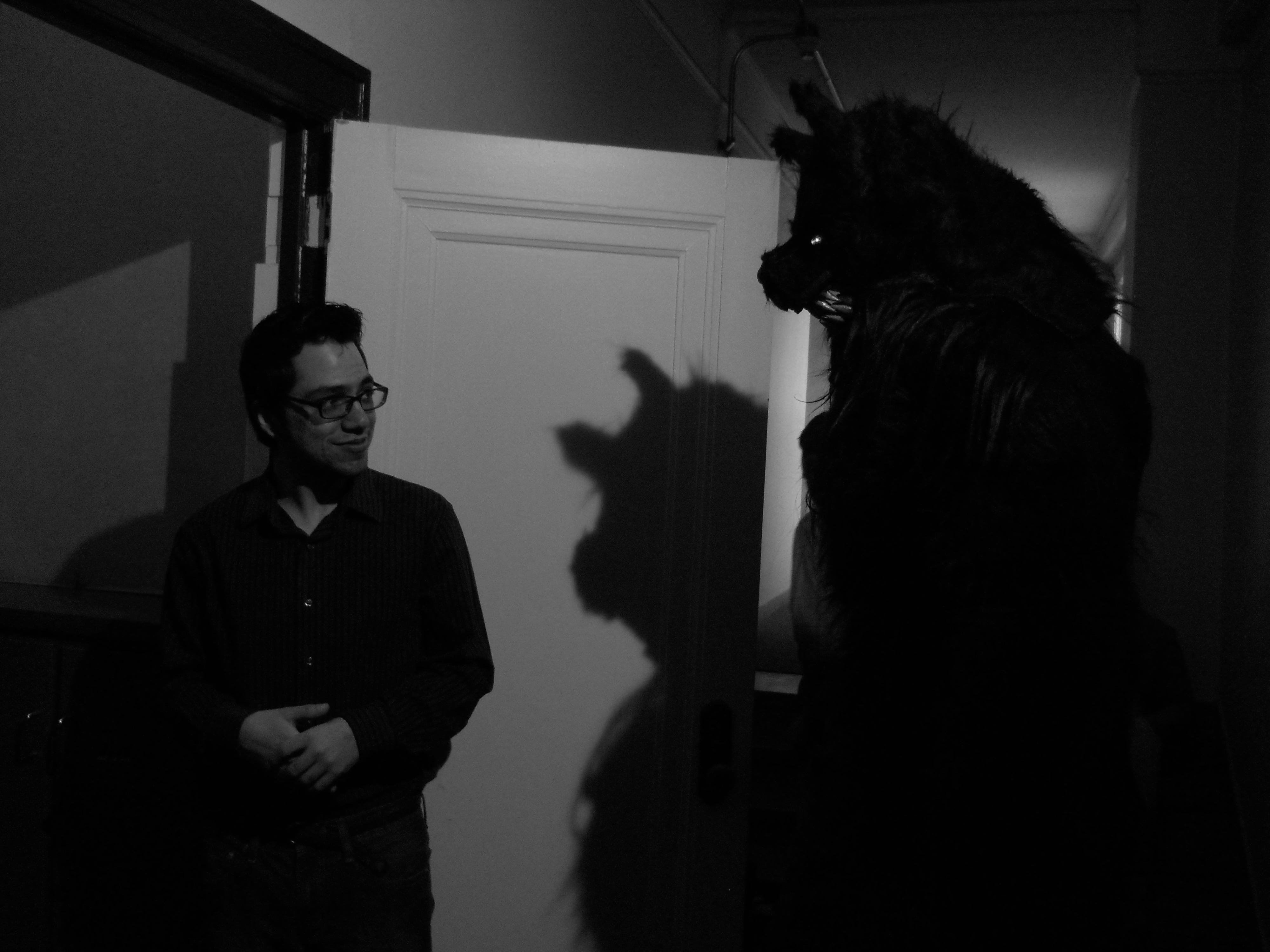
When I write, I don’t think about production constraints. I don’t start with a budget and work my way backwards. I write what I want to make.
And what I want to make is often challenging. It’s hard enough making an indie film with no money, let alone a blockbuster-type spectacle.
For Real American, my last project, an episode I wrote takes place at a political rally. On the day we filmed that scene, the number of extras who turned up was disappointingly low. We used a variety of tricks to try to make the crowd look bigger than it was: we shot tight shots, filmed the same people multiple times in different costumes, and composited stock footage into the background. We did our best with the compromises we had to make.
Just a couple of years later, generating a political rally using AI is not only possible, but it’s much easier than staging and filming one. Heck, AI could do much of the filmmaking process more easily. But I don’t find inspiration in how easy something is. That’s not why I’m doing this.
I’m not saying I’m against using tools to make the process easier. A laptop with Final Draft is a tool. A tripod is a tool. A VFX plug-in like Mocha is a tool. And I’m okay with using machine learning the way Corridor Crew did to make keying green screen footage easier.
My issue is when a tool is presented as a solution, and it replaces the process entirely.
I love writing. I love sets, and costumes, and physical props. I love collaborating with people who have their own insights and talents, who surprise me by taking this thing from my head and turning it into more than I could have ever imagined.
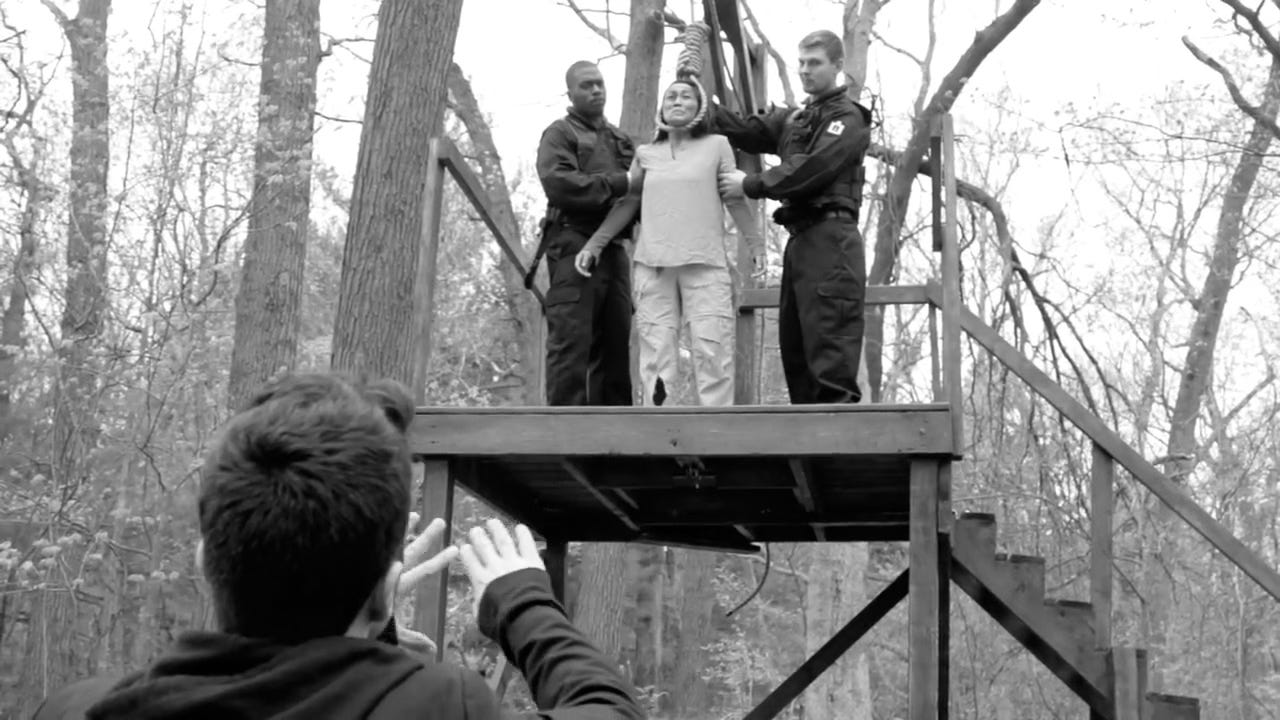
So yeah, AI might be easier, but whether something is easy isn’t really the point. The point is doing what you love, cliché as that sounds.
On top of that, The Shadow, for me, is about recompense. It’s about creating paid opportunities for the people who donated their time on my past projects. It might be cheaper to use AI, but how does that help the people who’ve helped me?
Maybe I’ll use Mocha’s AI masking tools for roto or Corridor Crew’s AI keyer, but I will not use AI-generated text, images, or sounds. If The Shadow gets made, it will be a human-made film.
After all, Walter B. Gibson wrote 282 novels about The Shadow, and he did it all without using AI.1
Gibson, W. B. (1979). The Shadow Scrapbook. Harvest/HBJ.